



History remembers Michelangelo as a titan — a sculptor of impossible marble, a painter of cosmic ceilings, a restless soul who transformed stone into emotion. Yet behind the monumental genius stands a quieter, more intimate question: Was there a possible love that influenced how Michelangelo saw beauty?

Growing Up Together: Proximity and Possibility
Imagine the scene. A brilliant, intense young Michelangelo. A refined, aristocratic Contessina. Both moving through the same corridors. Both shaped by the same Renaissance atmosphere.They were young. They were observant. They inhabited a world where art, poetry, and beauty were constant companions. It is not difficult to understand why later generations imagined a connection deeper than simple acquaintance. Not scandalous. Not dramatic. But perhaps…A possible affection.A silent admiration. A youthful emotional imprint. Renaissance courts were complex spaces — layered with hierarchy, etiquette, and unspoken tensions. Feelings often existed in glances, gestures, shared moments rather than declarations.
The Feminine Ideal in Michelangelo’s Vision 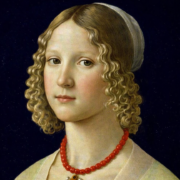
Michelangelo’s portrayal of women remains one of the most intriguing aspects of his art.
His female figures are rarely fragile or ornamental. Instead, they radiate:Strength, Dignity, Intellectual presence,Sculptural authority.They are serene yet powerful.
Tender yet monumental. Could early exposure to aristocratic grace — embodied by figures like Contessina — have influenced Michelangelo’s internal image of idealized femininity?
Many scholars and art lovers find the thought irresistible.
Beauty Beyond Time
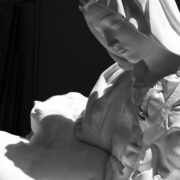
In Rome, inside St. Peter’s Basilica in the Vatican, Michelangelo’s Pietà continues to silence visitors. The Virgin Mary appears astonishingly young. Not as a grieving mother worn by life, but as an embodiment of purity, composure, and timeless beauty. Her face is calm.Her presence luminous. Her sorrow restrained.She is not simply a woman. She is an idea. Some observers have poetically wondered: Did Michelangelo draw upon a memory of youthful nobility? A face once seen in Florence? A presence associated with grace and refinement? The sculpture does not answer — it only deepens the mystery.From Florence to the Vatican: Beauty Evolves
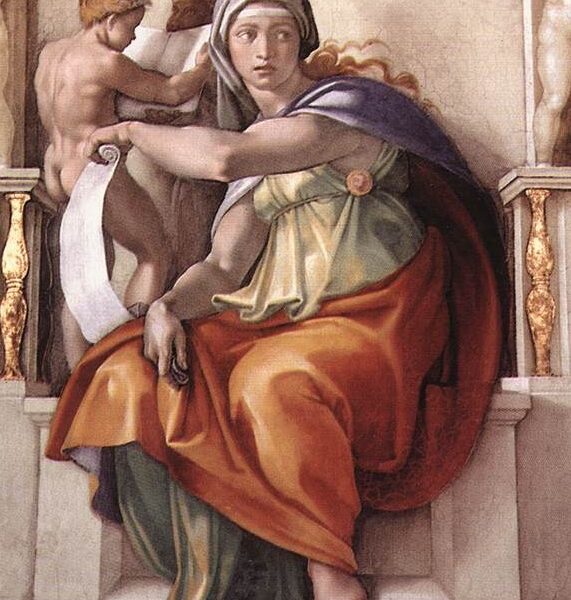 Michelangelo carried Florence within him wherever he went.Even while painting the ceiling of the Sistine Chapel in the Vatican, his artistic language reflected the intellectual DNA of his youth.
The Sibyls — those majestic female prophets — dominate the ceiling with extraordinary presence.
They are: Commanding, Muscular,Wise, Intensely alive. Not passive beauties, but embodiments of knowledge and destiny.
They possess an almost supernatural authority — beauty fused with power.
Michelangelo carried Florence within him wherever he went.Even while painting the ceiling of the Sistine Chapel in the Vatican, his artistic language reflected the intellectual DNA of his youth.
The Sibyls — those majestic female prophets — dominate the ceiling with extraordinary presence.
They are: Commanding, Muscular,Wise, Intensely alive. Not passive beauties, but embodiments of knowledge and destiny.
They possess an almost supernatural authority — beauty fused with power.
The Sibyls: Echoes of an Ideal
Michelangelo’s Sibyls feel sculpted rather than painted. Their bodies twist with energy. Their expressions hold contemplation and force. They seem to represent something beyond individual identity — a universal feminine archetype blending intellect, mystery, and physical grandeur. And yet…Viewers often search for human origins behind artistic ideals. Was Michelangelo inspired by classical statues alone? By philosophy? By lived experience? By remembered impressions of elegance encountered in Florence? The possibility lingers beautifully unresolved.
 Michelangelo’s Search for Universal Beauty
More than anything, Michelangelo pursued universal beauty. Not decorative beauty. Not fashionable beauty. But beauty as:Harmony,Inner nobility, Divine reflection, Emotional truth. His figures — male and female — strive toward perfection yet reveal tension, effort, transcendence. Beauty for Michelangelo was never superficial.It was spiritual.Love, Memory, and Artistic Imagination.
Great artists rarely separate life from creation.A gesture remembered.A face admired. A presence once felt.All may dissolve into artistic vision, transformed beyond recognition.
Rather than asking whether Contessina de’ Medici was definitively Michelangelo’s muse, perhaps a more poetic question emerges:
Could a possible youthful affection have subtly influenced how he imagined grace, purity, and feminine dignity?
Not as portrait.
Not as likeness.
But as emotional atmosphere.
Florence, Rome, and the Vatican: A Journey Through Inspiration
For modern travelers, this story adds a romantic dimension to Italy’s artistic landmarks. In Florence, you walk where Michelangelo was formed.In Rome, you witness marble turned into emotion.In the Vatican, you stand beneath the Sistine Chapel ceiling. Each city becomes part of a larger narrative:Youth, Genius, Beauty, Mystery , Possible love. Why This Story Continues to Enchant.Because it humanizes genius. Because it suggests that even the greatest masters were once young, impressionable, capable of admiration and emotional connection. Because art invites interpretation, not just analysis. And because Michelangelo’s works — especially the Pietà and the Sistine Chapel — radiate a tenderness that feels deeply human beneath their divine perfection.
 The Enduring Mystery of Michelangelo
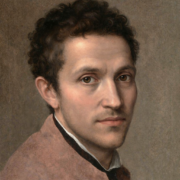
Michelangelo left behind sculptures, frescoes, architecture — but also questions.Questions about beauty. Questions about inspiration. Questions about the emotional currents flowing beneath Renaissance brilliance. Perhaps that is why we continue to look for stories. For glances exchanged in Florentine palaces.
For silent bonds. For possible loves hidden between marble folds and painted skies.
Whether history, intuition, or poetic imagination, the idea of a possible connection between Michelangelo and Contessina de’ Medici offers something precious: A reminder that art is born not only from technique and intellect, but from emotion, memory, and the mysterious chemistry of human experience.
And in the end, Michelangelo’s greatest devotion remained constant: The search for beauty that transcends time, place, and identity. From Florence to Rome, from marble to fresco, from the Pietà to the Sistine Chapel in the Vatican, his legacy continues to whisper:
Beauty is eternal.
Mystery is part of its power.
